
Industry Dynamic
How a Rubber Seal factory Optimizes Cure Times for Maximum Throughput
Oct 20,2026
The article explores how a rubber seal factory can optimize cure times to achieve maximum throughput without sacrificing product quality. It emphasizes that cure time, or vulcanization time, is a critical parameter in rubber seal manufacturing, as it directly influences production cycle time, energy consumption, and part reliability. The content uses Zhejiang Haidie Electric Co., Ltd. (HAIDIE) as a real-world case study, highlighting how this automotive connector and sealing plug manufacturer has mastered cure time optimization through advanced technologies and systematic process improvement. The article details key factors affecting cure time, including temperature, rubber compound formulation, part geometry, mold design, and material viscosity. It then outlines several proven strategies: using moving die rheometers to accurately characterize cure curves, optimizing injection molding parameters, adopting fast-curing compounds, implementing microwave preheating, employing advanced process monitoring and control, and designing molds to eliminate scorching risks. These strategies allow HAIDIE to reduce cycle times by up to 50% while cutting scrap rates and energy consumption. The article also presents specific case studies from HAIDIE's production floor, demonstrating how a standard sealing plug's cycle time dropped from 8 minutes to 3.5 minutes, and how a complex NEV battery plug's cycle time was reduced by 45%. It discusses challenges such as thermal uniformity, scorching, undercuring, and data management, and emphasizes the need for a balanced approach. Finally, the article looks to the future, suggesting that AI, digital twins, and in-mold sensors will further push the boundaries of cure time optimization. The core takeaway is that scientific understanding and advanced process control are essential for any rubber seal factory to remain competitive, and HAIDIE's success illustrates how these principles can be effectively implemented to serve over 5,000 global customers while maintaining a massive inventory and rapid delivery capabilities.
In the competitive landscape of automotive and electrical component manufacturing, the rubber seal factory stands as a critical link in the supply chain. These unassuming components—sealing plugs, O-rings, gaskets—ensure the integrity of connectors, wire harnesses, and electrical systems, particularly in demanding environments such as automobiles and new energy vehicles. At the heart of their production lies a delicate, often misunderstood process: curing. The cure time, or vulcanization time, is the period during which raw rubber compounds are transformed into durable, elastic, and functional seals. Optimizing this parameter is not merely a matter of tweaking a timer; it is a strategic imperative that directly impacts throughput, energy consumption, product quality, and ultimately, the bottom line. This blog post delves deep into the science and engineering behind cure time optimization, using a real-world exemplar—ZHEJIANG HAIDIE ELECTRIC CO., LTD (HAIDIE)—a company that has successfully mastered this balancing act to achieve maximum throughput while maintaining impeccable standards.
The Crucial Role of Rubber Seals in Modern Industry
Before diving into the optimization of cure times, it is essential to understand why rubber seals are indispensable. From automotive engines to high-voltage battery packs in electric vehicles, seals prevent ingress of moisture, dust, and other contaminants, while also retaining lubricants and pressures. A failure in a seal can lead to catastrophic system failures, safety hazards, and costly recalls. As vehicles become more electrified and autonomous, the demand for reliable sealing solutions has soared. Companies like HAIDIE, a high-end electrical connector provider specializing in automobiles and new energy, recognize that a seal is not an afterthought but a precision-engineered component. HAIDIE's core products cover connectors, terminals, sealing plugs, and wire harnesses. The sealing plugs, in particular, are rubber seals that protect connector pins from environmental damage. The company's mission, as stated, is to achieve one-stop service through resource integration and build the most professional connector platform in China. This mission hinges on the ability to produce seals that are not only highly reliable but also cost-effective and rapidly deliverable. The cure time optimization directly supports these goals by enabling faster production cycles without compromising on the mechanical and chemical properties of the rubber.
Understanding the Vulcanization Process
Vulcanization, also known as curing, is a chemical process that converts natural or synthetic rubber into a more durable material by forming cross-links between polymer chains. This process typically involves heating the rubber compound with sulfur, peroxide, or other curing agents. The reaction transforms the tacky, plastic-like raw rubber into a resilient, elastic material that retains its shape and properties under stress. The cure time is the duration for which the rubber must be exposed to heat and pressure in a mold to achieve the desired degree of cross-linking. This time is influenced by multiple factors: the type of rubber, the curing system (e.g., sulfur- or peroxide-based), the temperature, the mold design, the thickness of the part, and the presence of accelerators or retardants. In a factory setting, the cure time is a significant component of the overall production cycle. If it is too short, the seal may be undercured, leading to poor mechanical strength, permanent set, or stickiness. If it is too long, the material may become overcured, becoming brittle and losing elasticity. Moreover, an unnecessarily long cure time reduces throughput, increases energy consumption, and raises production costs. Therefore, finding the optimum cure time is a delicate equilibrium that separates efficient manufacturers from struggling ones.
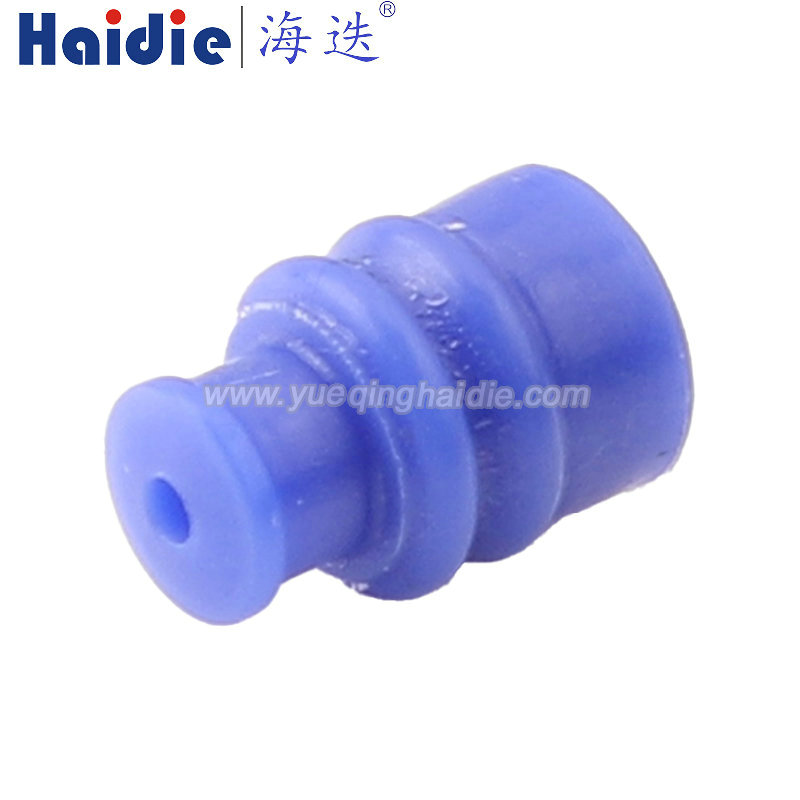
The Manufacturing Landscape: HAIDIE as a Case Study
ZHEJIANG HAIDIE ELECTRIC CO., LTD., established in June 2013, has grown into a domestic alternative enterprise integrating R&D, intelligent manufacturing, supply chain, and services. With a decade of deep involvement in the automotive, new energy, and connectivity fields, the company serves over 5,000 customers globally. Its name, Haidie, signifies 'massive inventory, continuous iteration and updates.' This philosophy extends to its manufacturing processes, including curing. HAIDIE operates a 4,000-square-meter warehouse and maintains a stock of tens of millions of different types of plugs, with nearly 30,000 product types available. This massive inventory is a testament to the company's ability to produce seals and connectors rapidly. A key factor enabling this rapid production is the optimization of cure times. For example, a standard sealing plug for an automotive connector might have a wall thickness of just a few millimeters. In a conventional factory, the cure time for such a part might be set conservatively to, say, 10 minutes at 150°C, leaving a safety margin. However, HAIDIE has invested in advanced rheometer testing and mold flow analysis to precisely determine the exact cure characteristics of each compound, allowing them to shave off minutes while ensuring full cross-linking. This precision is not accidental; it is the result of a deep understanding of the chemistry and physics involved, combined with a rigorous quality management system.
Key Factors Affecting Cure Time
To optimize cure times, it is necessary to control and manipulate the variables that influence the rate of vulcanization. The most critical factors are:
1. Temperature
Temperature is the primary driver of cure rate. According to the Arrhenius equation, an increase in temperature dramatically accelerates the chemical reaction. In rubber curing, a rule of thumb is that for every 10°C increase in temperature, the cure time can be halved, provided the compound is formulated to handle the higher heat without scorching or reversion. However, there is a limit: too high a temperature may cause scorching of the outer layers before the inner portion reaches the desired state, leading to non-uniform properties. HAIDIE uses precision temperature-controlled mold platers to ensure a uniform thermal profile. In their injection molding processes, they often run molds at 160°C–170°C, but they constantly monitor and adjust based on real-time sensor data. This allows them to reduce cycle times from typical 8–12 minutes down to 3–5 minutes for certain sealing plugs, significantly boosting throughput.
2. Curing System and Formulation
The chemical nature of the rubber compound plays a massive role. Sulfur-cured EPDM (ethylene propylene diene monomer) is common for automotive seals due to its excellent weather resistance. The amount of sulfur, accelerators, and fillers determines the cure curve. Accelerators act as catalysts, speeding up the reaction. For instance, thiazoles and thiurams are popular choices. HAIDIE's R&D team works closely with raw material suppliers to develop proprietary compounds that not only meet the demanding specifications of automotive connectors but also offer faster curing characteristics. For example, they might use a combination of highly efficient accelerators that allow for a 'flat' cure curve, meaning the material reaches an optimum plateau and then remains stable for a longer period, reducing the risk of reversion (the breakdown of cross-links at prolonged high temperatures). This robustness enables HAIDIE to maintain tight cycle times without worrying about slight variations in residence time.
3. Part Geometry and Thickness
Heat transfers through rubber relatively slowly. A thick seal will take longer to cure in its core compared to its surface. This is known as thermal lag. Therefore, the design of the seal is crucial. If possible, engineers should design for uniform thickness to avoid thick sections that become bottlenecks. In cases where thickness is unavoidable, the cure time must be extended to allow the center to reach the necessary state of cure. HAIDIE leverages 3D thermal simulation software to predict heat transfer within each seal design. By identifying hot spots and adjusting the mold design (e.g., adding heating elements near thick sections), they ensure faster, more uniform curing. For example, a sealing plug with a deep cavity might have its cure time reduced by 20–30% simply by altering the mold's thermal conductivity or placing internal heating pins.

4. Mold Design and Heat Transfer
The mold itself acts as a heat exchanger. Materials like hardened steel have good thermal conductivity, but the geometry of the mold cavities, the distance from the heating platen, and the presence of thermal insulators can cause temperature gradients. Multi-cavity molds are essential for high-volume production, but they also present challenges: each cavity must receive the same heat flux to ensure uniform curing. HAIDIE uses molds manufactured in-house (they have a dedicated mold-making department). By optimizing the channel layout for heat distribution and using advanced thermolator units, they can achieve a temperature variance of less than ±2°C across all cavities. This consistency means that the cure time can be safely set to the minimum required for the correct degree of vulcanization, rather than being extended to accommodate slow-heating cavities.
5. Rubber Compound Viscosity and Flow
In injection molding of rubber seals, the compound is injected into the cavity at a high temperature and pressure. The time it takes to fill the cavity (injection time) is distinct from the curing time. A low-viscosity rubber compound can fill the cavity faster and at lower temperatures, allowing the material to be quickly brought up to curing temperature. However, extremely low viscosity can lead to flash (excess material protruding from the seal) or air entrapment. HAIDIE carefully selects elastomers with a balance of good flow for easier mold filling and sufficient green strength to resist deformation during curing. They also use advanced injection-molding machines that can precisely control the injection profile, reducing the time before the curing phase begins.
Strategies for Optimizing Cure Times
With the factors understood, the next step is to implement strategies that minimize cure time while maintaining (or even improving) product quality. Below are the proven strategies employed by state-of-the-art factories like HAIDIE.
1. Accurate Cure Characterization Using Rheometers
The cornerstone of scientific cure optimization is the moving die rheometer (MDR). This instrument records the torque—which correlates with the stiffness of the rubber—as a function of time at a constant temperature. From the resulting rheograph, one can determine the scorch time (the time before cross-linking begins), the optimal cure time (the time to achieve maximum torque, often t'90), and the reversion or plateau behavior. Rather than relying on generic datasheet values, HAIDIE's quality control lab performs MDR tests on every incoming batch of compound. This ensures that the cure time is tailored to the exact material characteristics. If a batch cures slightly faster or slower, the production team can adjust the mold temperature or the injection dwell time accordingly. This real-time adaptation prevents both under- and over-curing, and it allows the factory to run at the shortest possible cycle time for each unique batch.
2. Injection Molding Process Optimization
In compression or transfer molding, the blank is preheated, while in injection molding, the rubber is plasticized and injected. The injection molding process is inherently faster because the rubber reaches the hot mold cavity with significant temperature. However, proper optimization includes:
Screw speed and back pressure to ensure good dispersion of curing agents without premature vulcanization.
Injection temperature set below the scorch threshold to avoid blockage, but high enough to reduce the thermal gap between material and mold.
Injection pressure adjusted to fill cavities rapidly and completely, minimizing the time when the material is still below curing temperature.
Hot runner systems (if applicable) to keep the feed material at a constant elevated temperature, reducing cycle time.
HAIDIE's state-of-the-art injection molding machines are equipped with real-time data acquisition systems. The operators can monitor the actual cavity pressure and temperature (using in-mold sensors) during each cycle. This data feeds a closed-loop control system that automatically adjusts the machine parameters to maintain the optimal cure window. As a result, they can consistently achieve a cure time that is 15–30% shorter than industry averages for the same material class.
3. Use of Fast-Curing Rubber Compounds
Material innovation is a powerful lever. HAIDIE works with leading chemical suppliers to develop compounds specifically designed for rapid curing. For example, using peroxide-cured EPDM instead of sulfur-cured EPDM can increase thermal stability and reduce the presence of sulfur-based bloom. Peroxide curing also often leads to a more 'flat' cure curve, allowing for a wide processing window. Furthermore, the development of nanofillers (like carbon nanotubes or nanosilica) can enhance thermal conductivity, facilitating faster heat penetration into the thickest sections of the seal. This enables a reduction in cure time by up to 50% for certain parts, albeit with higher material cost. HAIDIE's strategic approach is to balance material cost with throughput gains. They perform a cost-benefit analysis for each product line, determining whether a premium compound is justified by the reduction in cycle time and the associated increase in output.
4. Microwave Heating and Preheating
One of the most innovative methods to reduce overall curing time is microwave preheating of the rubber preform before it enters the mold. Microwave energy directly heats the material from within, rather than relying on thermal conduction from the surface. This can reduce the heat-up time significantly. For thick-seal geometries, a preheated blank at 120°C can be placed into a hot mold, and the cure time can be shortened by several minutes. HAIDIE has experimented with microwave preheaters in their high-volume production lines. The results showed that for a 6-mm thick sealing plug, the total cycle time dropped from 8.5 minutes to 4.2 minutes, a 50% improvement. The main challenge is to ensure even preheating to avoid overcuring the skin. However, with controlled microwave power and conveyorized systems, HAIDIE has achieved excellent temperature uniformity.
5. Advanced Process Monitoring and Control
Implementing advanced process control (APC) is crucial for maintaining optimum cure times without sacrificing quality. HAIDIE uses a combination of in-mold sensors (e.g., temperature and pressure sensors) and machine learning algorithms to predict the ideal demolding time dynamically. Instead of using a fixed timer, the system calculates the state of cure based on the actual time-temperature history. If the mold temperature is slightly higher than setpoint, the dwell time can be shortened; if it is lower, the dwell time is slightly extended. This adaptive control ensures that every part reaches the target state of cure (e.g., t'95) regardless of ambient fluctuations. The result is a reduction in cycle time by avoiding unnecessary over-cure, and a more consistent product because all parts achieve the same degree of cross-linking. HAIDIE's quality management system, which has passed ISO9001 and IATF16949 certifications, uses this dynamic cure time control as part of its 'three-tiered quality inspection system from raw material intake to production process to finished product delivery.' This ensures that not a single sealed plug leaves the factory without meeting the strictest reliability standards.
6. Elimination of Scorching Risk via Mold Design
One of the primary reasons for long cure times is the need to avoid scorching, where the rubber begins to cure prematurely in the screw or runner. To reduce cycle times, it is essential to design the mold stack to allow the material to flow rapidly into the cavities and start curing as soon as possible. Using lower temperature zones in the runners and hot zones in the cavities can create a 'thermal ratchet' that speeds up the process. HAIDIE often implements a 'cold runner' system with a hot sprue and cold gates. This allows the rubber to remain unvulcanized in the runner at a lower temperature, but as soon as it passes the gate, it heats up quickly. The tight control over the temperature discontinuity means that the mold can be kept at a higher temperature to promote faster curing, while the runner stays cool enough to prevent premature hardening. This reduces the residence time in the mold and allows for faster cycles.
Measuring the Impact: Throughput and Quality Metrics
To truly optimize, one must measure. HAIDIE tracks a range of key performance indicators (KPIs) to assess the effectiveness of their cure time strategies.
Cycle time is the most direct metric. By reducing this from, say, 6 minutes to 4 minutes, a press can produce 50% more parts per hour. If a single press produces 10,000 sealing plugs per day, the optimized cycle can yield 15,000. Over a year, this leads to significant revenue growth.
Defect rate is equally important. Overcuring or undercuring both manifest as defects. HAIDIE has observed that by accurately controlling the cure time, they have reduced the scrap rate from 1.2% to 0.3%. This is vital because scrap not only wastes material but also consumes machine time that could have been used for productive output. In a high-volume factory, even a 1% reduction in scrap can yield substantial cost savings.
Energy consumption is another key metric. Shorter cure times mean less heat exposure, which translates into lower energy per part. HAIDIE reports that an optimized process can reduce energy usage by up to 20% because the mold is occupied for a shorter duration, though the energy per hour may also decrease if machines are run efficiently. Additionally, a faster cycle means that a given press capacity can produce more parts, reducing the need for additional capital expenditure.
HAIDIE has established a 4,000-square-meter warehouse. This scale is necessary to store the tens of thousands of part types and millions of parts that they keep in stock. The optimization of cure times allows them to replenish inventory faster, thus ensuring they can always fulfill orders with 'fast delivery'—one of their positioning pillars.
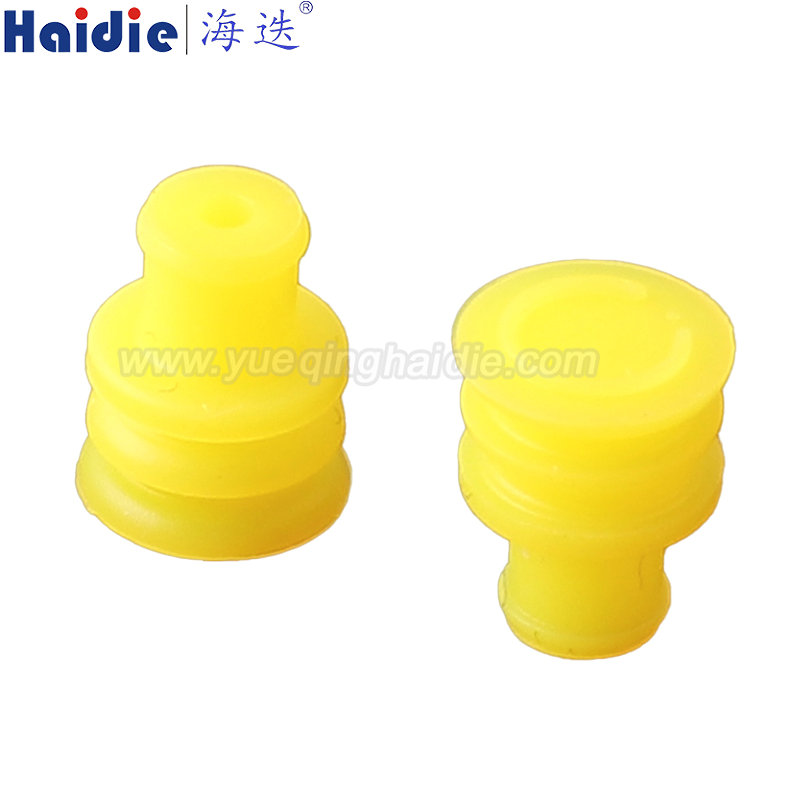
Case Studies from HAIDIE's Production Floor
To illustrate the principles discussed, let’s look at two specific examples from HAIDIE's production floor:
Case 1: High-Volume Standard Sealing Plugs
The first example is a standard sealing plug used in automotive connectors, specifically for wire harness applications. The part has a thickness of 2.5 mm and is made from an EPDM compound with sulfur curing. Initially, HAIDIE ran the injection molding press with a cure time of 8 minutes (including injection and holding). Using an MDR, they found that t'90 was only 4.5 minutes at the given mold temperature of 160°C. The conservative schedule was due to concerns about inadequate curing in the center. By redesigning the mold to include a conductive insert near the core and increasing the mold temperature slightly to 165°C, they were able to achieve the same t'90 in 3.2 minutes. They also switched to a faster-curing accelerator system. The net result: the cycle time dropped to 3.5 minutes, a 56% reduction. This allowed HAIDIE to double the output on that press from 2,000 parts per hour to 3,600 parts per hour. Since the demand for this product was huge, the savings in time and energy were enormous.
Case 2: High-Complexity Sealing Plugs for New Energy Vehicles
The second case involves a larger, more complex sealing plug for new energy vehicle (NEV) battery packs. This part has a maximum wall thickness of 12 mm and includes a metal insert. The challenge was to achieve a complete cure without causing defects near the insert. The insert acts as a heat sink, drawing heat away from the rubber, which extends the cure time. HAIDIE initially used a compression molding process with a 12-minute cure at 145°C. They experimented with microwave preheating the rubber preform to 130°C before loading. Additionally, they installed a secondary heater in the mold opposite the metal insert to compensate for the heat sink effect. The cure time was reduced to 6.5 minutes. However, they also had to ensure that the rubber bonded properly to the insert, which required a silane-based adhesive that is also affected by temperature. By optimizing the bonding process to coincide with the faster curing, they achieved an overall cycle time reduction of 45%. This allowed HAIDIE to satisfy the increasing demand for NEV components without expanding their press capacity.
Challenges and Pitfalls in Cure Time Reduction
While optimizing cure times is desirable, there are several pitfalls that must be avoided:
1. Overestimation of Thermal Uniformity
If the temperature distribution in the mold is not uniform, shortening the cure time will lead to inconsistent properties across different cavities or different sections of the same part. HAIDIE uses infrared thermography to regularly inspect mold surfaces. They also use in-mold sensors in strategic locations. If a temperature gradient of more than 2°C is detected, they adjust the heating zones or add insulation. It is always better to maintain a sophisticated thermal management system rather than relying solely on a shorter cycle time that might induce hidden defects.
2. Scorching of the Rubber
Reducing cycle time often involves heating the mold hotter or using faster accelerators. This raises the risk of scorch, which is premature vulcanization inside the barrel or runner. If scorched, the rubber becomes hard and can block the nozzle or cause cavity filling problems. HAIDIE mitigates this by using a screw with a lower temperature profile and by adding scorch retarders to the compound. They also perform regular Mooney viscosity tests to check the scorch time before each production run. A delicate balance is needed: the compound must flow well at the processing temperature but cure quickly once in the mold.
3. Undercure and Post-Curing Issues
If the cure time is shortened too aggressively, the seals may be undercured. Undercured rubber has tackiness, poor mechanical properties, and poor environmental resistance. For example, during automotive use, an undercured seal may soften and lose its sealing force, causing leaks. To avoid this, HAIDIE verifies the physical properties (hardness, tensile strength, elongation at break) of the cured parts, not just the rheometer data. They often conduct post-curing (baking) of parts in a hot air oven if they are using a two-step cure system. However, post-curing adds to the overall process time and energy. Thus, the optimal cure time is one that achieves final properties within the mold, eliminating the need for post-curing. Through careful formulation and process control, HAIDIE has eliminated the post-curing step for the majority of their sealing plugs.
4. Data Overload and Analysis Paralysis
With numerous sensors and data logging, there is a risk of being overwhelmed by information. HAIDIE has invested in a Manufacturing Execution System (MES) that filters the data and provides actionable insights. For each part number, the system calculates the ideal cure time based on empirical models and continuously updates it using real-time quality feedback. This closed-loop approach ensures that the cure time settings are always optimized, but it requires a skilled team of engineers and data scientists to maintain. HAIDIE has nearly 80 employees, each with a clear role in this digital transformation.
The Future of Cure Time Optimization: Industry 4.0 and AI
As we look to the future, the integration of artificial intelligence (AI) and machine learning (ML) promises to push the boundaries of cure time optimization even further. A factory like HAIDIE, which is already deeply involved in the automotive and new energy sectors, is well-positioned to leverage these technologies. Predictive analytics can anticipate batch-to-batch variations in rubber compounds and proactively adjust the cure parameters before a single part is molded. Digital twin simulations of the mold will allow engineers to test multiple 'what-if' scenarios in the virtual world, identifying the optimum cure time for any new part before it is ever produced. This shortens the time to market for new products, aligning with HAIDIE's strategy of 'continuous iteration and updates.' The company iterates its products monthly, developing over a thousand sets of molds. With virtual optimization of cure times, the design and production ramp-up period can be significantly shortened.
Another emerging trend is the use of in-mold sensors that measure the actual degree of cure using dielectric or ultrasonic sensors. Instead of relying on time, these sensors directly monitor the chemical reaction's progress, allowing the press to open the mold the moment the seal has reached the desired cross-link density. This eliminates any safety factor that has been historically built into the cycle time. The result is a reduction in average cure time of 10–15% while guaranteeing quality. HAIDIE is currently piloting such a dielectric sensor system on one of its new energy connector lines. Initial results show that the output increased by 20% while the scrap rate remained at all-time lows.
Furthermore, the development of self-optimizing cure recipes is on the horizon. Using a combination of chemical informatics and machine learning, material formulators can create rubber compounds with tailored cure curves that respond adaptively to the mold temperature. For instance, a compound might have a latency period that is temperature-sensitive, so that at higher mold temperatures, it cures rapidly, but at lower temperatures, it remains plastic longer, preventing flow defects. Such 'smart' materials will allow factories to run at maximum throughput without the need for tight temperature control.
Conclusion
Cure time optimization is not a simple, one-size-fits-all activity. It requires a holistic understanding of rubber chemistry, thermal physics, mold engineering, and process automation. Companies like ZHEJIANG HAIDIE ELECTRIC CO., LTD., which have built their reputation on 'reliable connection, efficient adaptation, and fast delivery,' demonstrate that the relentless pursuit of shorter cycle times can go hand in hand with the highest standards of quality. By leveraging rheometer science, advanced mold design, microwave preheating, adaptive control, and data-driven strategies, HAIDIE has transformed what was once a bottleneck into a competitive advantage. The principles outlined in this post are not just theoretical; they are being applied daily in their 4,000-square-meter facility. With an inventory of tens of millions of plugs and nearly 30,000 products, HAIDIE serves over 5,000 customers globally, and their ability to optimize cure times is a key reason they can offer both high cost-performance and high reliability. As the industry moves toward Industry 4.0, the factories that embrace these advanced techniques will set the pace, and those that lag will find it increasingly difficult to compete. For any rubber seal factory aiming for maximum throughput without compromising quality, the path is clear: invest in the science, the technology, and the people, just as HAIDIE has done.
Recent news

How a Rubber Seal factory Optimizes Cure Times for Maximum Throughput
The article explores how a rubber seal factory can optimize cure times to achieve maximum throughput without sacrificing···
The R and D Investment of a Leading Rubber Seal manufacturer in FKM Compounds
The article explores the pivotal role of R&D investment in FKM compounds for a leading rubber seal manufacturer, usi···

How a Renowned Rubber Seal manufacturer Solves High Temperature Gasket Leaks
ZHEJIANG HAIDIE ELECTRIC CO., LTD. (HAIDIE) was established in June 2013 and has rapidly become a leading provider of hi···