
Industry Dynamic
How a Wire Harness supplier Facilitates Design Changes During Development
Oct 27,2026
Design changes during the development of automotive and new energy products are inevitable and pose significant challenges in terms of time, cost, and quality. A high-caliber wire harness supplier plays a pivotal role in mitigating these challenges and enabling smooth design evolution. ZHEJIANG HAIDIE ELECTRIC CO., LTD (HAIDIE) exemplifies how a supplier can facilitate such changes through a combination of engineering collaboration, extensive inventory, in-house mold-making, rapid prototyping, agile manufacturing, and robust quality assurance. HAIDIE’s massive 4,000-square-meter warehouse, stocked with tens of millions of connectors and terminals from leading global brands, ensures immediate component availability, often eliminating long lead times. Their engineering team provides valuable Design for Manufacturability feedback, while their mold-making capability enables quick production of custom components. Flexible production lines and fast-track communication allow for seamless implementation of change orders. Quality certifications such as ISO9001 and IATF16949 assure that design iterations maintain high reliability and traceability. By leveraging these capabilities, OEMs can reduce the development cycle, lower costs, and accelerate time to market. A responsive wire harness supplier like HAIDIE is not merely a vendor but a strategic partner that empowers designers to innovate and adapt without fear of delays or failures. For companies seeking to stay competitive, aligning with a supplier that truly understands and facilitates design changes is a decisive advantage.
In the fast-paced realm of automotive and new energy product development, change is the only constant. Design modifications are inevitable—driven by evolving market demands, new regulatory requirements, component obsolescence, or the relentless pursuit of enhanced performance and cost-efficiency. For original equipment manufacturers (OEMs) and tier-one suppliers, managing these changes effectively can be the difference between a successful product launch and costly delays. The unsung hero in this intricate dance of evolution is often the wire harness supplier. These specialized partners provide more than just pre-assembled bundles of wires; they serve as strategic collaborators capable of navigating the stormy waters of design modifications with agility and expertise. This article explores the multifaceted ways in which a proficient wire harness supplier, such as ZHEJIANG HAIDIE ELECTRIC CO., LTD (HAIDIE), becomes an indispensable ally in facilitating design changes throughout the development cycle.
The Inevitability and Complexity of Design Changes
Design changes in wire harnesses are not rare exceptions; they are the norm. Consider a new electric vehicle being developed. Early on, the battery management system might require a specific connector configuration. Midway through development, a supplier may discontinue a critical terminal, or new safety standards might mandate additional shielding. Suddenly, the entire wire harness layout needs adjustment. Such changes are fraught with complexity. The harness is a bespoke assembly, often with dozens of branches, hundreds of wires, and numerous connector interfaces. A single alteration can ripple through the design, affecting everything from routing and packaging to electrical performance and manufacturability.
Moreover, the timing of design changes can be critical. Changes that occur early are relatively inexpensive and easy to accommodate. But as development progresses, modifications become increasingly costly and disruptive. This is where a responsive and capable wire harness supplier can make a profound difference. By accelerating feedback loops, offering rapid prototyping, and maintaining a flexible manufacturing environment, they minimize the negative impact of design changes, helping to keep projects on schedule and within budget.

The Supplier as a Strategic Partner in Change Management
Traditionally, wire harness suppliers were viewed as a commodity source—places to send a finalized design for production. But in today's dynamic development landscape, this perspective is obsolete. Leading suppliers position themselves as integral members of the product development team. They bring to the table deep engineering expertise, manufacturing knowledge, and supply chain intelligence. When a design change occurs, these suppliers are not simply implementers; they are problem solvers. For instance, HAIDIE, a renowned connector and wire harness specialist, emphasizes its role in "reliable connection, efficient adaptation, and fast delivery," directly addressing the need for speed and adaptability in design iterations.
HAIDIE has grown from its establishment in June 2013 into a domestic alternative enterprise integrating R&D, intelligent manufacturing, supply chain, and services. With nearly 80 employees and a 4,000-square-meter warehouse, the company maintains a massive inventory of tens of millions of plugs and close to 30,000 product variations. This vast product pool enables them to source alternative components quickly when a design change requires a different connector or terminal, often without needing to order from the original equipment manufacturer (OEM) and wait weeks for delivery. This capability is foundational to their role as a change facilitator.
Engineering Collaboration and Design for Manufacturability (DFM)
One of the primary ways a wire harness supplier facilitates design changes is through proactive engineering collaboration. The best suppliers do not wait for a fully completed design; they engage early. By leveraging their manufacturing expertise, they provide valuable Design for Manufacturability (DFM) feedback. This feedback might highlight potential issues with a proposed routing that could cause strain on connectors, suggest more cost-effective alternatives for hard-to-source terminals, or identify assembly processes that could be simplified.
HAIDIE exemplifies this collaborative approach. The company boasts a robust R&D mindset, iterating its product portfolio monthly and developing over a thousand sets of molds. Their engineering team is well-versed in the nuances of automotive power, chassis, and body control systems, as well as new energy vehicle platforms. When a design change is introduced, HAIDIE's engineers immediately assess the manufacturability of the new concept. They might recommend a different connector series that offers equivalent performance but is already stocked in large quantities, thereby slashing lead times and reducing tooling costs. They also work closely with customers to ensure that the design change does not introduce unanticipated electrical interference or mechanical stress, using their experience to preemptively solve problems.
Virtual Prototyping and 3D Simulation
In today's digital age, physical prototypes are not always the first stop. Many sophisticated wire harness suppliers employ 3D simulation tools to model the harness within the vehicle environment. This allows for virtual testing of routing paths, bend radii, and connector mating under various conditions. When a design change is proposed, these simulation tools can quickly evaluate the impact without the cost and delay of physical sampling. The supplier can then provide data-driven recommendations to the customer, accelerating the decision-making process. HAIDIE's deep involvement in the connector field, with products benchmarked against leading international brands, ensures their simulation models are highly accurate and reliable, giving customers confidence to proceed with changes at breakneck speed.
Rapid Prototyping and Small-Batch Production
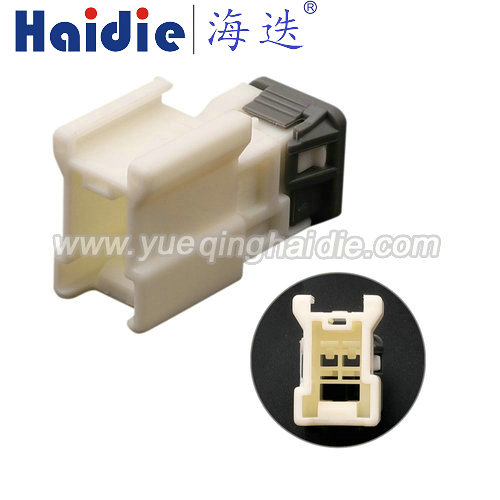
Once a design change is approved, the next hurdle is obtaining a physical prototype for validation. In the past, this process could take weeks, if not months, as special tooling was required for each new connector or seal. A responsive supplier short-circuits this timeline through rapid prototyping capabilities. HAIDIE, for instance, has a dedicated in-house mold-making facility. With the ability to quickly manufacture and modify molds, they can produce custom connector housings or terminal blocks in a matter of days, not months. This is a game-changer when a design change necessitates a brand-new component shape or mounting feature.
Moreover, HAIDIE's emphasis on having a vast inventory of standard components means that many design changes can be accommodated with parts that are already on the shelf. If a change simply substitutes one connector from Tyco, Sumitomo, Yazaki, or Deutsch for another, the new component is likely already in stock. This allows for immediate production of small batches of revised harnesses, which can be used for vehicle-level testing, fit-up checks, and functional evaluations. The speed of this physical iteration cycle is crucial for compressing development timelines.
Harnessing Inventory and Standardization to Reduce Lead Times
The financial and strategic value of inventory in a design change scenario cannot be overstated. When a design change is introduced, the availability of raw materials and components is often the critical path. Suppliers without deep inventories may need to issue purchase orders to upstream component makers, leading to lead times of 12-16 weeks or more. In contrast, HAIDIE has built its corporate identity around the concept of "massive inventory, continuous iteration and updates." Their 4,000-square-meter warehouse is stocked with tens of thousands of types of plugs and millions of pieces, covering a full range of standard connectors, terminal blocks, and wire harness assemblies. This staggering inventory allows them to react to design changes almost immediately.
Let's consider a scenario: a design change in a new-energy vehicle's electric drive system requires replacing a 2-pin high-voltage connector with a 3-pin variant to accommodate an additional sensor signal. The original connector might be an expensive custom item with a long lead time. A supplier like HAIDIE can quickly search their extensive inventory for a compatible 3-pin connector from a major brand or compatible Chinese alternative that meets the same specifications. Because they hold millions of parts, they can often ship the required components within 24-48 hours. This inventory-driven agility goes hand-in-hand with standardization. By encouraging the use of standard connectors and terminals, suppliers reduce the need for custom tooling and lower the barriers to change.
Agile Manufacturing and Flexible Production Lines
Once the new components are available, manufacturing must be able to pivot quickly. Traditional assembly lines are often set up for a single harness type, with dedicated fixtures and test equipment. A design change may require altering the assembly sequence, installing a new pin layout, or adding a different wire length. Agile manufacturing principles, such as flexible workstations and easily reconfigurable test fixtures, allow suppliers to accommodate these changes without significant downtime. HAIDIE has invested in intelligent manufacturing capabilities that emphasize rapid response. Their nearly 80 employees are cross-trained to handle multiple tasks, and their production lines are designed to change over between variants with minimal fuss. This flexibility extends to volumes; whether the customer needs a small run for pre-production builds or a full-scale production batch after the design change is validated, the supplier can scale accordingly.
Fast-Track Communication Channels
Underpinning all of this is communication. Design changes, especially during development, occur in an environment of high uncertainty and frequent updates. A supplier that buries its head in the sand or requires a formal, lengthy approval process will quickly become a bottleneck. Modern suppliers maintain dedicated liaison engineers, often co-located with customer teams or equipped with daily teleconference capabilities. They share real-time information on workload, component stocks, and potential risks. HAIDIE, with its global customer base of over 5,000 companies, has refined its communication protocols to be proactive. When a design change is in the air, the supplier can immediately assess the impact on other orders, providing the customer with an accurate picture of schedule implications. This transparency is vital for making informed decisions about how to proceed.
Quality Assurance Throughout Design Changes
One might assume that rapid changes and quality are opposing forces. However, a mature supplier integrates quality assurance into the change process, ensuring that each iteration is not only fast but also reliable. HAIDIE's commitment to quality is demonstrated through its certifications, including ISO9001 and IATF 16949 (the latter being the global automotive quality management standard). They employ a three-tiered quality inspection system—from raw material intake to production processes to finished product delivery—which remains in effect even during rapid change implementation.
When a design change results in the use of a new terminal or a different wire gauge, the supplier's quality team is involved from the start. They validate the crimp profile, perform pull tests, and ensure the electrical continuity meets specifications. Their test equipment is often automatically updated with new parameters when a work order for a changed harness is released. This prevents human error and keeps the quality high, even as the design evolves. In addition, rigorous testing is performed to meet environmental requirements, such as resistance to vibration, temperature extremes, and moisture. A supplier with a strong quality culture ensures that the design change does not introduce latent defects that might surface in the field.
Documentation and Traceability
Design changes mandated by safety or regulatory standards necessitate impeccable documentation. A professional wire harness supplier maintains full traceability of every component, from the source manufacturer to the final assembly. HAIDIE's systems track each batch of connectors and terminals, documenting their test results and compliance certificates. When a design change is formalized, the supplier produces updated Documentation Packages, including drawings, wiring diagrams, and FMEA (Failure Mode and Effects Analysis) updates. This documentation is critical for customer engineering sign-off and for passing strict automotive audits. The capability to generate precise, current documentation quickly is a hallmark of a mature supplier that can handle design changes professionally.
Supply Chain Integration and Logistics
Design changes often involve managing a ripple effect through the supply chain. If a specific connector is suddenly unavailable, the supplier must find an alternative, possibly from a different manufacturer, and ensure its compatibility. HAIDIE's broad product portfolio, which includes replacements for connectors from Tyco, Sumitomo, Yazaki, Deutsch, Bosch, FCI, and other major brands, gives them a distinct advantage. They can source an equivalent connector from another brand or their own high-quality line, mitigating the risk of obsolescence. This is particularly crucial in the automotive and new energy industries, where component lifecycles are shortening.
Beyond sourcing, logistics must be expedited to support design changes. HAIDIE's 4,000-square-meter warehouse is strategically located to enable rapid dispatch. They ship global orders through over 5,000 customers, demonstrating their logistical capabilities. In a design change scenario, they can prioritize emergency orders, using expedited shipping to deliver prototype harnesses or critical components to the customer's facility within days. By synchronizing their inventory management with project timelines, they act as a true extension of the customer's supply chain department.
Case Study: HAIDIE’s Approach to Design Changes
To illustrate these principles in action, let’s consider a hypothetical design change scenario and how HAIDIE would handle it. A leading new energy vehicle manufacturer is developing a high-voltage battery distribution unit. Initially, the harness connecting the battery management system (BMS) to the main controller was designed with an 8-pin sealed connector from a European brand. However, during thermal testing, the design team realizes they need an additional sensor for temperature compensation. This necessitates an upgrade to a 12-pin connector, which is not currently in the manufacturer's approved vendor list.
Rather than waiting 16 weeks for a new custom connector, the OEM approaches HAIDIE. Within hours, HAIDIE's engineers review the existing product datasheets and cross-reference with their available stock. They identify a 12-pin connector from a comparable Asian manufacturer that they stock in high volume. This connector is not only physically compatible but also has even better thermal performance. HAIDIE provides a sample of the connector, along with a revised harness drawing generated with their engineering software, to the OEM for validation. Because the mold for this connector is already in HAIDIE's possession (one of their over a thousand sets), there is no delay in producing prototypes.
The OEM approves the modification, and HAIDIE promptly begins producing a small batch of the revised harnesses for the next development vehicles. Meanwhile, they also perform full electrical testing on the new assembly, documenting crimp s, contact resistance, and insulation displacement. The completed harnesses are shipped within three days of the approval. In parallel, HAIDIE’s quality team updates the FMEA and PPAP documents, which the OEM accepts. This entire design change process, from concept to delivery, is compressed from an estimated 10 weeks to just over one week. This is only possible because HAIDIE has combined its engineering acumen, massive inventory, mold-making capabilities, and agile manufacturing into a seamless service.

Long-Term Value of a Change-Friendly Supplier
The true value of a wire harness supplier’s capability in facilitating design changes is not just in crisis management; it’s in enabling innovation. When a supplier can quickly adapt, OEM designers are empowered to try bolder ideas, knowing that the harness supplier will keep up. This is particularly important in the fast-moving new energy vehicle sector, where technology is evolving every year. HAIDIE’s mission is to achieve one-stop service through resource integration, building the most professional connector platform in China, and making Haidie the most competitive connector brand. By offering this comprehensive support, they not only support individual design iterations but also contribute to the broader advancement of the industry.
Best Practices for Working with a Wire Harness Supplier on Design Changes
For OEMs and product developers, realizing the full benefits of supplier collaboration requires a structured approach. Here are some best practices to keep in mind:
Engage Early: Involve the wire harness supplier from the concept stage. A supplier like HAIDIE can offer insights on component selection and manufacturability that can preempt many later-stage design changes.
Maintain Transparent Communication: Share upcoming changes as soon as they are anticipated, even if they are not yet final. Suppliers can prepare inventory and allocate resources if they know a change is on the horizon.
Leverage Their Inventory: Ask about standard components that can be used to fulfill the experimental design. Avoid specifying exotic parts without considering stock availability.
Agree on Change Control Procedures: Ensure that both parties understand the workflow for issuing changes, including documentation requirements, sample approvals, and production ramp-up plans.
Utilize their Quality Systems: Rely on the supplier's testing capabilities to validate design changes, but also review their updated documentation to ensure compliance with your own standards.
Build a Relationship: Treat the supplier as a strategic partner, not just a transactional vendor. A long-term relationship fosters greater willingness to go the extra mile when design changes are needed.
The Cost Implications of Slow Design Changes
Consequences of design changes that are not managed efficiently are severe. Every extra week spent waiting for a prototype translates directly into a higher overall development cost. Whether it’s the cost of engineering time, lost revenue from a delayed product launch, or the expense of expediting other components, the bill adds up quickly. By partnering with a supplier that has the inventory and manufacturing expertise to expedite design changes, OEMs can significantly reduce this financial burden. HAIDIE’s inventory of tens of millions of plugs and nearly 30,000 products is not just a marketing statistic; it’s a financial tool that helps customers avoid the costly downtime of waiting for parts.
Conclusion
Design changes are an inherent part of product development, particularly in industries as dynamic as automotive and new energy. The capacity of a wire harness supplier to facilitate these changes is a decisive factor in how quickly a product concept can become a ready-for-market reality. Suppliers like ZHEJIANG HAIDIE ELECTRIC CO., LTD. demonstrate what is possible when engineering expertise, massive inventory, mold-making capability, agile production, and rigorous quality assurance are all aligned. They allow design engineers to iterate with confidence, knowing that their wire harness partner can keep pace. In an era where speed-to-market is a competitive mandate, choosing a supplier that can effectively handle design changes is not just a convenience—it is a strategic imperative. The future of product development likely lies even more in deep collaboration between OEMs and their technology partners. HAIDIE’s model of maintaining a vast inventory, continuously iterating its product range monthly, and serving over 5,000 customers globally attests to the viability and success of this approach. As the industry evolves, the wire harness supplier will increasingly be recognized not as a bottleneck but as a catalyst for innovation.
Summary
Design changes during the development of automotive and new energy products are inevitable and pose significant challenges in terms of time, cost, and quality. A high-caliber wire harness supplier plays a pivotal role in mitigating these challenges and enabling smooth design evolution. ZHEJIANG HAIDIE ELECTRIC CO., LTD (HAIDIE) exemplifies how a supplier can facilitate such changes through a combination of engineering collaboration, extensive inventory, in-house mold-making, rapid prototyping, agile manufacturing, and robust quality assurance. HAIDIE’s massive 4,000-square-meter warehouse, stocked with tens of millions of connectors and terminals from leading global brands, ensures immediate component availability, often eliminating long lead times. Their engineering team provides valuable Design for Manufacturability feedback, while their mold-making capability enables quick production of custom components. Flexible production lines and fast-track communication allow for seamless implementation of change orders. Quality certifications such as ISO9001 and IATF16949 assure that design iterations maintain high reliability and traceability. By leveraging these capabilities, OEMs can reduce the development cycle, lower costs, and accelerate time to market. A responsive wire harness supplier like HAIDIE is not merely a vendor but a strategic partner that empowers designers to innovate and adapt without fear of delays or failures. For companies seeking to stay competitive, aligning with a supplier that truly understands and facilitates design changes is a decisive advantage.
Recent news
How a Wire Harness supplier Facilitates Design Changes During Development
Design changes during the development of automotive and new energy products are inevitable and pose significant challeng···
The Importance of Sample Lead Times When Choosing a Terminal supplier
Sample lead times are a crucial yet often undervalued factor in selecting a terminal supplier, directly impacting produc···

How a Rubber Seal factory Optimizes Cure Times for Maximum Throughput
The article explores how a rubber seal factory can optimize cure times to achieve maximum throughput without sacrificing···