
Industry Dynamic
How an Automated Auto Connector factory Ensures Zero Defect Production
Nov 09,2026
In this comprehensive article, we explore how ZHEJIANG HAIDIE ELECTRIC CO., LTD. (HAIDIE) ensures zero defect production in its automated automotive connector factory. The article underscores the critical importance of zero defect production in modern vehicles, where connectors serve as the nervous system of cars and any failure can lead to safety hazards and costly recalls. HAIDIE, founded in 2013, has become a leading provider of mid-to-high-end connectors for conventional and new energy vehicles, with a mission to build the most professional connector platform in China. The company's strategy integrates advanced automation, including precision injection molding, robotic assembly, automated optical inspection, and data-driven manufacturing execution systems, which eliminate human error and ensure consistent quality. A three-tiered quality inspection system—covering incoming materials, in-process production, and finished products—acts as a safety net to catch any anomalies. HAIDIE's vast 4,000-square-meter warehouse, holding tens of millions of pieces, enables thorough lot testing and environmental control, further safeguarding quality. The company holds ISO9001 and IATF16949 certifications, demonstrating its commitment to internationally recognized quality standards. Continuous iteration and innovation, with over a thousand mold sets developed and monthly product updates, keep HAIDIE at the forefront of connector technology. Serving over 5,000 customers globally, HAIDIE has earned its reputation as a reliable, high-performance connector brand. The article concludes that zero defect production is not merely a target but a culture and promise, ensuring that HAIDIE's connectors power the vehicles of today and tomorrow flawlessly.
Introduction
The modern automotive industry is undergoing a profound transformation, driven by the rapid advancement of electric vehicles, autonomous driving, and intelligent connectivity. As vehicles become more sophisticated, the demands placed on every individual component have intensified, particularly on the electrical connectors that form the nervous system of the car. These small but vital parts are responsible for transmitting power and data across a multitude of systems, from engine control units to infotainment platforms. Even a single defective connector can result in intermittent failures, complete system shutdowns, or, in worst-case scenarios, safety-critical incidents. Thus, achieving zero defect production has become a non-negotiable benchmark for automotive component manufacturers.
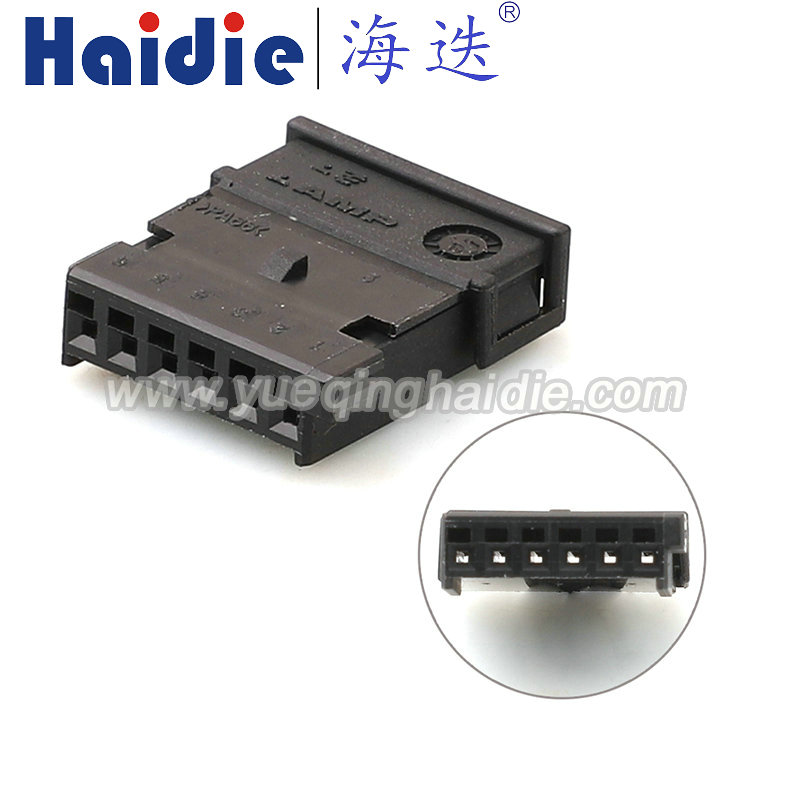
In this context, ZHEJIANG HAIDIE ELECTRIC CO., LTD.—widely recognized by its abbreviation HAIDIE—stands as a shining example of how an automated factory can consistently deliver connectors that meet the highest standards of quality and reliability. Founded in June 2013, HAIDIE has grown rapidly into a high-end electrical connector provider specializing in automobiles and new energy. The company's unwavering commitment to zero defect production has earned the trust of over 5,000 customers globally, positioning HAIDIE as a preferred brand for high cost-performance and high reliability in the mid-to-high-end connector market.
The Critical Importance of Zero Defect Production in Automotive Connectors
Automotive connectors are ubiquitous; a single vehicle can contain more than 300 connectors and thousands of terminals. Each one must operate flawlessly under extreme temperatures, vibration, and exposure to moisture and chemicals. The failure of a connector could lead to a malfunction in critical safety systems, such as airbags, anti-lock braking systems, or battery management systems in electric vehicles. Recalls due to electrical failures are both costly and damaging to a brand's reputation. Therefore, implementing zero defect production is not merely a matter of quality—it is a matter of customer safety, warranty cost reduction, and brand integrity.
Zero defect production does not mean that products are merely inspected after they are made; it means designing processes that prevent defects from occurring in the first place. This proactive approach relies on robust process control, continuous monitoring, and an unrelenting focus on improvement. It requires a manufacturer to embrace cutting-edge technology, statistical methods, and a culture where every employee understands that quality is not an afterthought but an integral part of their daily work.
HAIDIE: Company Overview and Vision
ZHEJIANG HAIDIE ELECTRIC CO., LTD., established in June 2013, is a high-tech enterprise that integrates research and development, intelligent manufacturing, supply chain management, and services. The company primarily engages in the sales, injection molding, mold making, wire harness processing, and the selection, design, and processing of automotive connectors and kits. With a dedicated team of nearly 80 employees and a strategically located 4,000 square-meter warehouse, HAIDIE maintains a massive inventory—tens of millions of pieces representing tens of thousands of different types of plugs. This extensive stocking capability enables the company to provide rapid delivery and meet the diverse needs of its customers without compromising on quality.
The name 'Haidie' carries a deep meaning: 'massive inventory, continuous iteration and updates.' This philosophy drives the company to constantly renew its product range and improve its manufacturing processes. HAIDIE's mission is to achieve one-stop service through resource integration, build the most professional connector platform in China, and ultimately become the most competitive connector brand globally. This mission is supported by a clear strategic positioning of 'reliable connection, efficient adaptation, and fast delivery,' focusing on the mid-to-high-end electrical connection market and emphasizing domestic substitution and customized services.
Core Products and Services
HAIDIE's core product portfolio includes connectors, terminals, sealing plugs, and wire harnesses. The company specializes in automotive connector replacements for leading global brands such as Tyco, Sumitomo, Yazaki, Deutsch, Bosch, and FCI. With nearly 30,000 product offerings, HAIDIE covers virtually every connector requirement found in power systems, chassis systems, and body control systems of both conventional gasoline-powered vehicles and new energy vehicles. This comprehensive range, combined with deep engineering expertise, allows HAIDIE to offer integrated solutions that simplify supply chains and reduce total cost of ownership.
The company's value proposition extends beyond the mere sale of components. HAIDIE provides custom design and processing services, leveraging its injection molding and mold-making capabilities to create application-specific connectors that meet unique customer specifications. By utilizing advanced mold-making technology, HAIDIE ensures that even custom parts are manufactured with microscopic precision, minimizing the risk of quality issues.
The Role of Automation in Achieving Zero Defects
Automation is the cornerstone of HAIDIE's zero-defect strategy. The factory is equipped with state-of-the-art automated machinery that runs continuously, ensuring consistency and repeatability in every production cycle. Automation eliminates the variability inherent in manual operations, which is the primary source of defects. By integrating robotics, sensors, and machine learning algorithms, HAIDIE has transformed its manufacturing environment into a fortress of quality.
Precision Injection Molding and Tooling
The production of connector housings begins with precision injection molding. HAIDIE operates advanced injection molding machines that are fully automated, with digital controls that maintain exact temperatures, pressures, and injection speeds. These parameters are critical; even a minor deviation can cause sink marks, flash, or dimensional inconsistencies. Automated systems continuously monitor and adjust the process in real time, ensuring that every molded component is identical to the last. Furthermore, HAIDIE's in-house mold making capability allows the company to produce and maintain high-precision molds that are essential for achieving tight tolerances. Each mold is carefully calibrated and periodically inspected using coordinate measuring machines (CMMs) to detect any signs of wear or damage before they lead to defective parts.
Automated Assembly and Material Handling
In the assembly phase, HAIDIE employs robotic arms for tasks such as inserting terminals, sealing plugs, and assembling connectors. These robots are programmed to perform actions with sub-millimeter accuracy, ensuring that every component is fully seated and locked into place. Automated material handling systems transport parts between stations with precision, preventing damage caused by manual handling. The robotic systems are equipped with force sensors and vision guidance, which allow them to detect anomalies in real time and reject any substandard assembly instantly.

In-Line Automated Inspection Systems
Inspection is woven into the production flow with sophisticated automated optical inspection (AOI) systems. High-resolution cameras capture images of each connector from multiple angles, and artificial intelligence algorithms analyze these images to detect surface defects, misalignments, incorrect colors, or contaminated contacts. This automated inspection is far faster and more accurate than human visual inspection. HAIDIE's inspection systems can spot defects smaller than a grain of sand, operating tirelessly 24/7 without the risk of fatigue-induced oversight.
Data-Driven Manufacturing Execution
HAIDIE leverages a suite of digital tools, including Manufacturing Execution Systems (MES), to orchestrate the entire production process. The MES tracks every batch of materials, every component, and every finished product, creating a complete digital pedigree. By using statistical process control (SPC) charts, quality engineers can monitor key characteristics such as terminal pull-out force, crimp height, and connector mating force in real time. If any parameter drifts outside the specification limits, the system triggers an immediate alarm, halting production until the root cause is found and corrected. This data-driven approach not only prevents defects but also provides invaluable insights for continuous improvement.
A Comprehensive Quality Inspection Framework
While automation dramatically reduces the risk of defects, HAIDIE recognizes that a robust quality assurance system must incorporate checkpoints throughout the production lifecycle. The company has established a three-tiered quality inspection system that acts as a safety net, catching any potential defect before it reaches the customer. This multi-layered approach is a hallmark of HAIDIE's rigorous commitment to quality.
Tier 1: Incoming Material Inspection
Quality starts with the raw materials. HAIDIE carefully selects suppliers of resins, metals, and wires, and every inbound shipment is inspected against strict specifications. The inspection includes verifying chemical composition, mechanical properties, and surface finish of materials. Components such as terminals are checked for plating thickness and hardness. Any material that fails to meet standards is immediately returned to the supplier, ensuring that defective raw materials never contaminate the production line. This proactive step prevents potential defects from propagating through the manufacturing process.
Tier 2: In-Process Inspection
During production, work-in-progress parts undergo inspection at various critical stages. HAIDIE's quality control teams perform both automated inspections and manual checklist-based audits. For example, after molding, dimensions are measured using precision gauges; after crimping, terminal pull-out force is tested to ensure a secure connection. Automated sensors and vision systems are integrated directly into the production line for 100% inspection of critical parameters. If a defect is detected, the system automatically segregates the nonconforming part and notifies the engineering team. This in-process inspection not only catches defects early but also reduces waste by preventing the further processing of defective components.
Tier 3: Final Product Inspection
The third tier occurs after all manufacturing processes are complete. Finished connectors undergo comprehensive functional testing, including electrical continuity checks, insulation resistance, and high-voltage testing where applicable. Visual inspection for cosmetic appeal and dimensional verification are also performed. HAIDIE employs automated test equipment (ATE) that can perform thousands of tests per hour, logging the results for each piece. For additional assurance, products are sampled for environmental tests—such as thermal shock, humidity exposure, and vibration—to simulate real-world automotive conditions. Only products that pass these rigorous evaluations are cleared for shipment.
| Inspection Tier | Scope | Methods |
|---|---|---|
| Tier 1 | Raw materials | Spectroscopy, tensile testing, plating thickness measurement |
| Tier 2 | In-process production | Dimensional gauges, pull-force testers, automated optical inspection |
| Tier 3 | Finished products | Functional testers, high-voltage test, environmental stress screening |
Inventory Management: A Strategic Enabler of Quality
HAIDIE's vast warehouse is more than just a storage facility; it is an integral part of its quality assurance strategy. The 4,000 square-meter warehouse holds an inventory of tens of millions of pieces, including one of the most extensive collections of standard connectors, terminal blocks, and wire harness assemblies in the industry. This deep inventory ensures that components are available for immediate shipment, but it also plays a critical role in quality management. By keeping large quantities of each product, HAIDIE can conduct thorough sample testing on each lot without delaying deliveries. Moreover, the warehouse is environmentally controlled to prevent degradation of materials due to humidity or temperature fluctuations, ensuring that stored connectors retain their original mechanical and electrical properties.
HAIDIE's inventory management system utilizes barcode and RFID tracking to maintain traceability from manufacturer to end customer. In the unlikely event of a quality issue, HAIDIE can quickly identify which lots are affected and quarantine them, protecting customers from potential recalls. This systematic approach to inventory control is a silent but powerful contributor to zero defect delivery.
Certifications: Building a Foundation of Trust
HAIDIE's quality management system is externally validated by internationally recognized certifications. The company holds ISO9001 and IATF16949 certifications, both of which are among the most stringent quality standards in the automotive industry. ISO9001 sets the framework for a robust quality management system, while IATF16949 incorporates additional requirements specific to automotive production, including advanced product quality planning (APQP), failure mode and effects analysis (FMEA), and measurement system analysis (MSA). These certifications demand that HAIDIE regularly undergoes internal and external audits, demonstrating continuous compliance and improvement.
The IATF16949 certification is particularly valuable as it is recognized by major automotive manufacturers worldwide. It signals to customers that HAIDIE's manufacturing processes are capable of consistently producing defect-free products. The certification process also drives HAIDIE to adopt best practices in risk management, contingency planning, and traceability—all of which contribute to zero defect production.
Continuous Innovation and Iteration
Zero defect production is not a static achievement; it requires a culture of relentless innovation and improvement. HAIDIE abides by this principle through a practice of monthly product iteration. The company's research and development team continuously evaluates market trends and customer feedback, releasing new or improved products at a staggering pace. To support this rapid innovation, HAIDIE has developed over a thousand sets of molds, each one precision-engineered to produce components with consistent quality. The performance of these new products is benchmarked against leading international brands, pushing HAIDIE to close the gap and set new industry standards.
Innovation at HAIDIE is not confined to product design. The company also invests in the latest manufacturing technologies, such as advanced robotics, artificial intelligence-based defect detection, and cloud-based data analytics. These technologies enable HAIDIE to perform predictive maintenance on machinery, identifying potential equipment failures before they can cause variability in production. By staying at the cutting edge of manufacturing science, HAIDIE continually raises the bar for what is possible in zero defect production.
Serving a Global Customer Base
HAIDIE's dedication to zero defect production has earned it a stellar reputation among customers worldwide. With a customer base exceeding 5,000, HAIDIE supplies connectors to a wide range of players in the automotive ecosystem, including original equipment manufacturers (OEMs), Tier-1 suppliers, and aftermarket distributors. The company's products are used in power systems, chassis, and body control modules of millions of vehicles, from fuel-efficient compact cars to high-performance electric vehicles.
What sets HAIDIE apart is its ability to combine high reliability with outstanding customer service. The company's one-stop service model integrates sales, injection molding, mold making, wire harness processing, and connector selection/design. This integration reduces lead times and simplifies the supply chain for customers. Additionally, HAIDIE's large inventory ensures that customers can always rely on fast delivery, even for products with low demand. The company's technical team works closely with customers to understand their specific requirements and recommend the optimal connector solution, backed by the assurance of zero defect quality.
Conclusion
ZHEJIANG HAIDIE ELECTRIC CO., LTD. has demonstrated conclusively that an automated auto connector factory can achieve zero defect production. By integrating state-of-the-art automation, a comprehensive three-tiered inspection system, vast inventory management, and certified process controls, HAIDIE ensures that every connector leaving its factory is flawless. The company's focus on continuous innovation and customer-centricity has made it a trusted partner for thousands of clients around the globe.
Zero defect production is more than a technical achievement; it is a mindset. At HAIDIE, quality is not determined by the final inspection—it is embedded in every process, from the initial design to the delivery of the finished product. As the automotive industry moves toward an increasingly electrified and automated future, HAIDIE remains prepared, with its automated factory and unwavering commitment to zero defects, to power the vehicles of tomorrow with unmatched reliability.
Recent news
The Hidden Cost of Using Unplated Terminal in Humid Environments
The article explores the often-overlooked yet significant drawbacks of using unplated terminals in humid environments. I···
How an Automated Auto Connector factory Ensures Zero Defect Production
In this comprehensive article, we explore how ZHEJIANG HAIDIE ELECTRIC CO., LTD. (HAIDIE) ensures zero defect production···

The Safety Protocols Essential in a High Voltage Wire Harness factory
The article provides a comprehensive overview of the essential safety protocols required in a high voltage wire harness ···